Why bother developing self-forgetfulness? (Part 1 of 2)
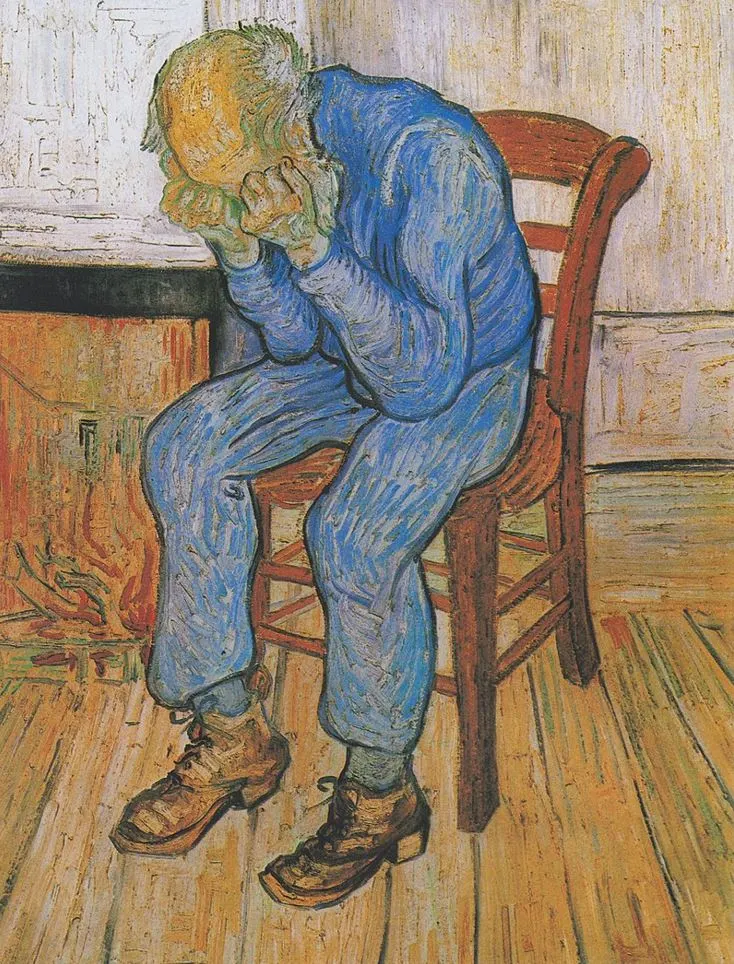
Hell is oneself.
T. S. Eliot, Poet and Playwright (from The Cocktail Party)
In the opening lines of William Shakespeare’s The Merchant of Venice, Antonio the titular merchant confides in two of his friends, agonizing over his inability to explain the origins of a sadness that his gripped him. “In sooth, I know not why I am so sad”, he gloomily remarks, before concluding that he “[has] much ado to know [him]self.” Antonio’s inexplicable sadness is remarkably relatable. Often, when we turn our attention inwards to examine the contents of our minds, we find that we too are held in the thrall of a sadness that escapes our comprehension. In the play, Antonio concludes that he simply does not understand himself well enough to explain the source of his sadness. However, recent neuroscience findings may be able to shed some light on why Antonio was “so sad.”
Although these lines are the first ones uttered in the play, as soon as they are spoken there is sufficient evidence to pinpoint the culprit of the venetian merchant’s sadness. What is this evidence?
The fact that Antonio is thinking about himself!
Over the last two decades, there has been a suffusion of studies (Check: Sources for Further Thinkering) on how self-referential thought orchestrated by certain brain regions—collectively called the default mode network (or DMN)—contributes to a sadness much akin to Antonio’s. The central findings of these studies stated simply is this:
We grow increasingly sad the more we think about ourselves.
This is the first half of an explanation for why we must develop self-forgetfulness, i.e., there is very little difference between being sad and thinking about ourselves more than need to. The second half of the explanation involves various social structures that compel us to worry about ourselves.
This shall be the subject of a future article. Stay tuned!
Sources for Further Thinkering:
The default mode network and self-referential processes in depression
Depressive Rumination, the Default-Mode Network, and the Dark Matter of Clinical Neuroscience
The Default Mode Network and Rumination in Individuals at Risk for Depression
Did this make you wonder?
What did this make you notice, remember, question, or see differently?
If this reflection added a little light to your day, you're welcome to .