Could an expanding list of possibilities ‘add up’ to persistence?
I shall either find a way or make one.
Seneca
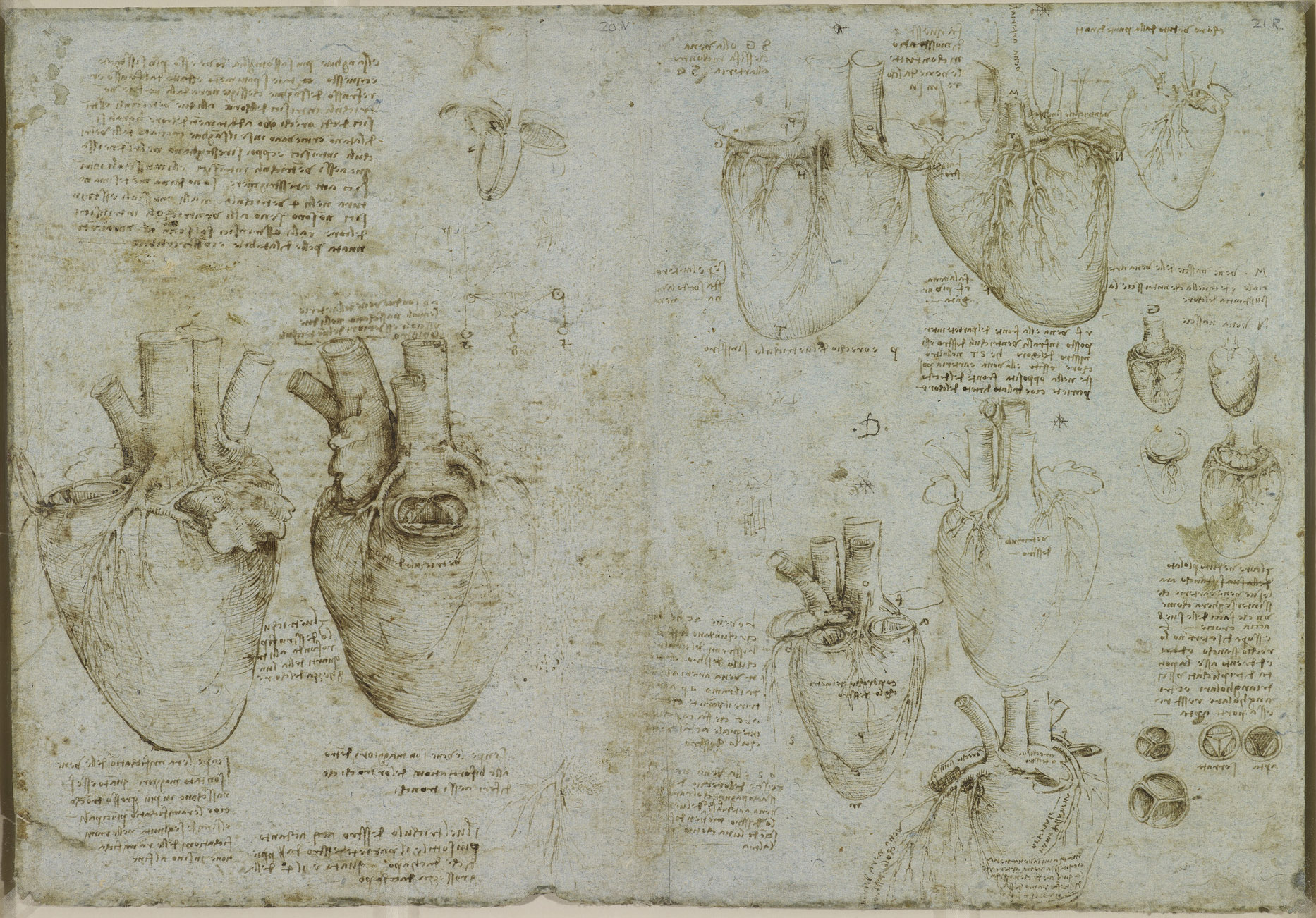
Persistence might be the very heart of life. Such a claim is not merely metaphorical. Consider the pulsating animal heart. It throbs indefatigably. As long as it persists, so do the lives it sustains. The centrality of persistence to life might have escaped my notice had it not been for an encounter with the work of a truly gifted mind: a Nobel Laureate in Economics and recipient of the ACM A.M. Turing Award, a distinction as rare as the personality who achieved it—Herbert Simon.
The intellectual enterprise that led me to a mathematical definition of persistence began, as it so often does, with a question: What are the biological constraints that bound human reason? This question was eventually eclipsed by the knowledge I gained along the way.
When Herbert Simon wrote his landmark paper, A Behavioral Model of Rational Choice, in 1955, he highlighted a feature of human reason that sages of antiquity have long pronounced: we are not omniscient reasoners. The glorification of human reason often obscures this fact. In a future essay, I hope to pore over research that highlights the literal biological constraints of what Simon calls the “choosing organism.” This essay, however, persists in its aim: to define persistence mathematically, drawing inspiration from Simon’s insights.
Imagine, as Simon would have you do, being tasked with selling your ancestral home. Having resided in this house your whole life, when asked to quote a price for it, Vulcan logic is silenced and nostalgia chooses the cost. You set what Simon calls an aspiration level: a minimum acceptable price at which you are willing to part ways with your home. You begin advertising the house for sale. Prospective buyers begin contacting you, keen on purchasing it. But here is the snag: your aspiration level appears to be too high. You turn down multiple offers, and soon you must make a decision: lower your acceptance price or widen your search for a buyer.
Persistence, as I conceptualise it, is the latter: maintaining the aspiration level while expanding the horizon of our search. Before I continue, let me introduce some mathematical notation that will help formalise the ideas discussed in the previous paragraph.
Formalising the decision
Let represent our aspiration threshold, the minimum acceptable value we are willing to settle for. Let represent an individual offer received, and its monetary value. We can then represent our decision to accept or reject an offer using a simple binary function:
Here, indicates that the offer satisfies our aspiration threshold and is accepted. Conversely, indicates that the offer falls short of our expectations and is rejected. The search, therefore, continues.
Notice that the subscript is important. It indicates that our decision is conditional upon a particular aspiration threshold. Whether an offer is satisfactory is not an intrinsic property of the offer itself, but rather a consequence of the criteria against which it is evaluated.
The field of alternatives
Now, let us consider the alternatives available to the individual. Let represent the set of all possible avenues through which we might seek a buyer. This could include advertising through different platforms, approaching property agents, exploring different geographical markets, or even relying on personal networks.
However, we do not necessarily explore every available avenue. Let represent the subset of alternatives considered at a given stage of our search.
The distinction between these two sets is important. The universe of possible alternatives is considerably larger than the subset we actually consider.
Suppose we encounter several unsatisfactory offers. We now have two possible courses of action. We could lower our aspiration threshold, or we could expand the alternatives through which we seek a buyer.
The latter can be represented as:
While maintaining our original aspiration threshold:
In other words, we expand the horizon of our search without changing the criteria by which we evaluate its outcomes.
Alternatively, we could lower our aspiration threshold:
In doing so, we modify the conditions under which an offer becomes acceptable. An offer that we might have previously rejected could now satisfy our revised expectations.
This distinction is central to the formulation I am proposing. Persistence, in this particular sense, is not the act of lowering one’s aspirations to accommodate the alternatives presently available. It is the willingness to expand the alternatives under consideration while preserving the criteria by which they are evaluated.
The cost of persistence
Of course, this is not to suggest that lowering one’s aspirations is necessarily irrational, nor that expanding one’s search is invariably optimal. The latter, after all, is not without cost. Time, effort, financial expenditure and opportunity costs may eventually outweigh the expected benefit of discovering further alternatives.
Let represent the incremental cost of expanding our search, and let represent the expected marginal benefit of doing so. A simplified decision criterion would be:
When the expected benefit of further search exceeds its cost, persisting may be worthwhile. Conversely, when the cost of further search outweighs its expected benefit, reconsidering our strategy, including the aspiration threshold itself, may be entirely reasonable.
Persistence, then, is not an unconditional virtue. It is a strategy whose merits depend, in part, on the possibilities that remain unexplored and the costs of exploring them.
I turn again to the hearts of those who persist to illustrate this. The rhythmic contraction and relaxation of the heart sustains the lives that depend upon it. The cost of its continued beating is considerable, yet the benefit it confers is immeasurable. Perhaps this is persistence in its most elemental form: the continuation of a process whose purpose transcends the cost of sustaining it. No wonder our hearts persist.
~ Granville D. Austin
Sources for Further Thinkering:
A Behavioral Model of Rational Choice – The paper that inspired this essay.
Did this make you wonder?
What did this make you notice, remember, question, or see differently?
If this reflection added a little light to your day, you're welcome to .