The Universe’s ‘creativity’ belies hidden order
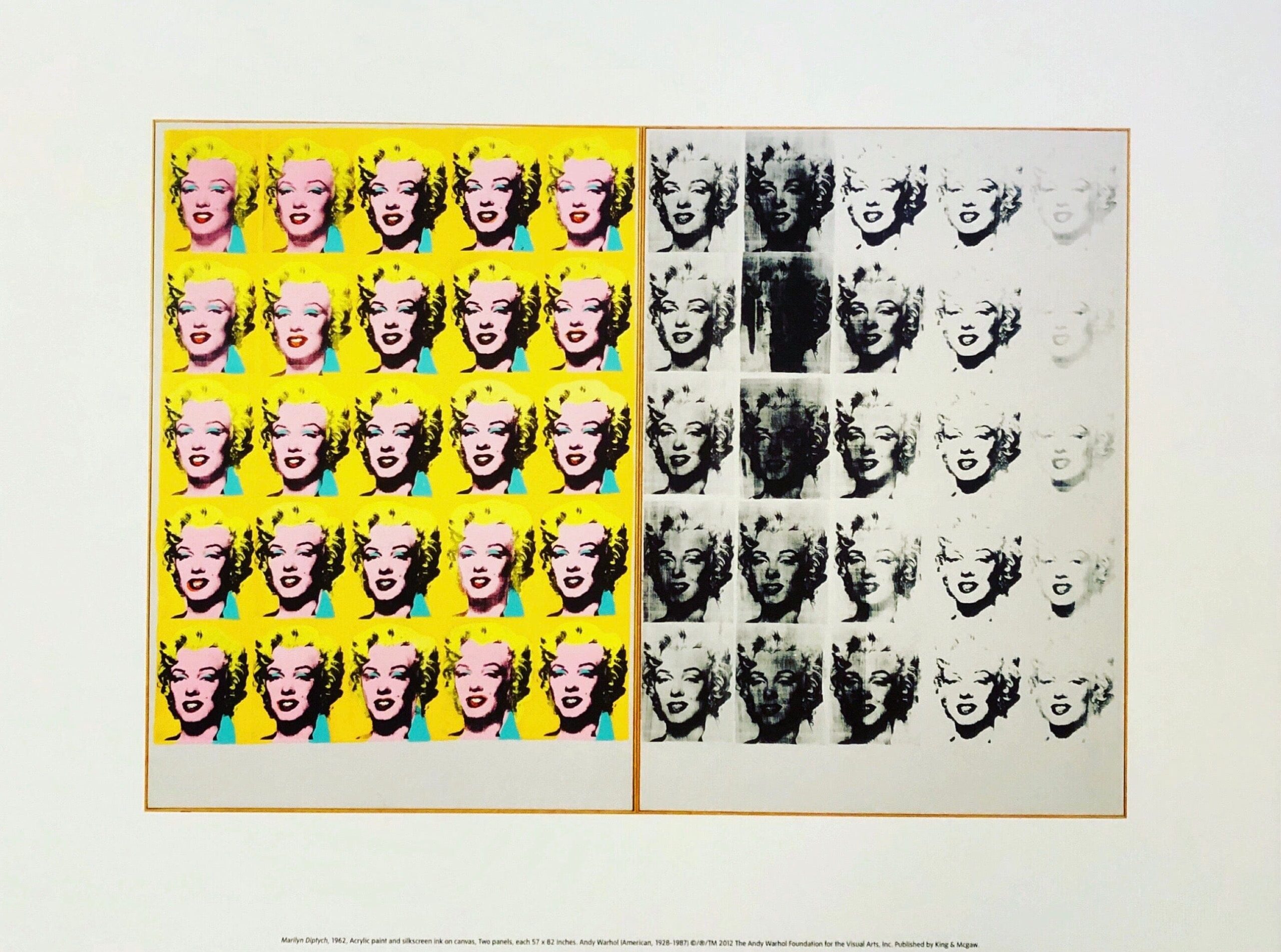
The Universe’s sentences read different, but the novel tells the same story.
Granville D. Austin
In an earlier Wonder Garden entry, I claimed that even the universe suffers with writer’s block. That is, it occasionally tires of novelty and slips into pattern. These patterns or regularities in nature make predictions possible. The scientist’s theory, the doctor’s prescription, and the gambler’s unwavering self-belief are all constructed on the assertion that the universe though marvellously complex, is comprehensible.
The reason I mention gambling is because a sizeable portion of modern probability theory emerged from the rolls of dice. Abraham de Moivre, was a French mathematician who apart from using his artifice to make invaluable contributions to the field, also turned to the subject to accurately predict his death. Among his writings one will find The Doctrine of Chances, a book that empowered gamblers to make calculated gambles.
I mention the book, since it contains one of the earliest depictions of what modern statistics calls the Central Limit Theory (CLT).
The CLT is truly fascinating, because it reveals that below the apparent randomness of nature, order reigns supreme. To appreciate the CLT, consider the humble barrel cactus.
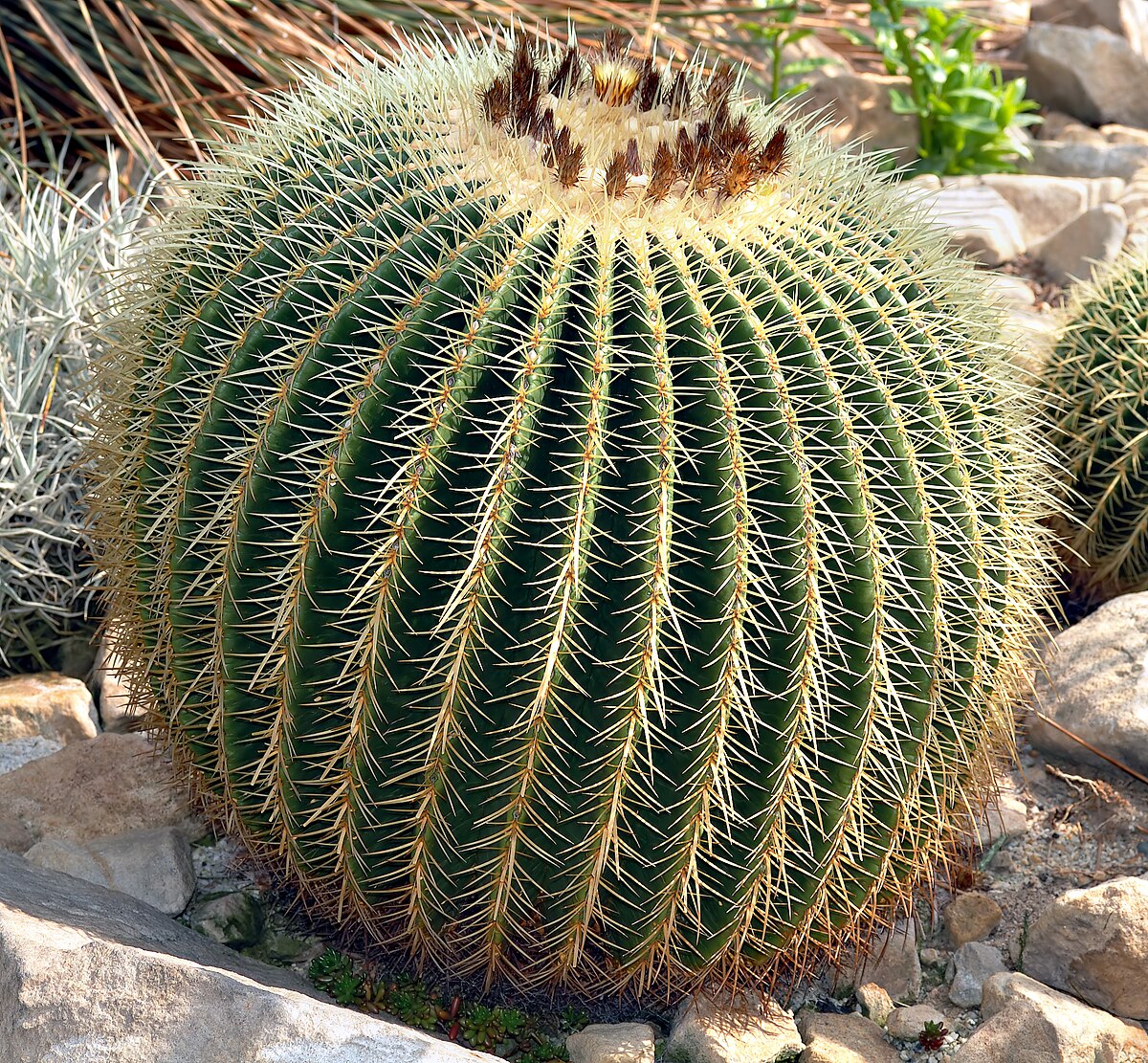
Imagine being tasked with calculating the average number of spines on the cactus. This is an impossible ask! It is difficult enough to compute the number of spines on one cactus, let alone the number on every single cactus that exists!
Let us say however, that you manage to invent a device—let us call it the Spinenumerator—that is able to scan a cactus and render an accurate count of the number of spines. As you scan more cacti, you would observe variation in the number of spines. Nonetheless, let us say you manage to calculate the number of spines on 25 cacti, and you use your observations to calculate the mean.
Could we conclude that this value is a good estimate for the average number of spines on all barrel cacti? Keep in mind you only calculated the number of spines on 25 cacti.
This value may not capture the true population mean because of the size of your sample. To circumvent this limitation and estimate the mean number of spines on a barrel cactus, you decide to do two things:
- Increase your sample size to 100.
- Conscript 50 cacti-enthusiasts to collect 100 cacti and estimate the number of spines on them.
This would give you a collection of 50 sample means (each of the cacti-enthusiasts will have an average number of spines based on the cacti that they sampled and subjected to the Spinenumerator).
Now comes the interesting part.
The distribution of the observed number of spines on the 100 cacti that each of you measured might look very different. However, when you compile the mean number of spines from each of these distributions and then use these values to produce a consolidated distribution of all the sample means, you obtain a bell curve (or a normal distribution)!
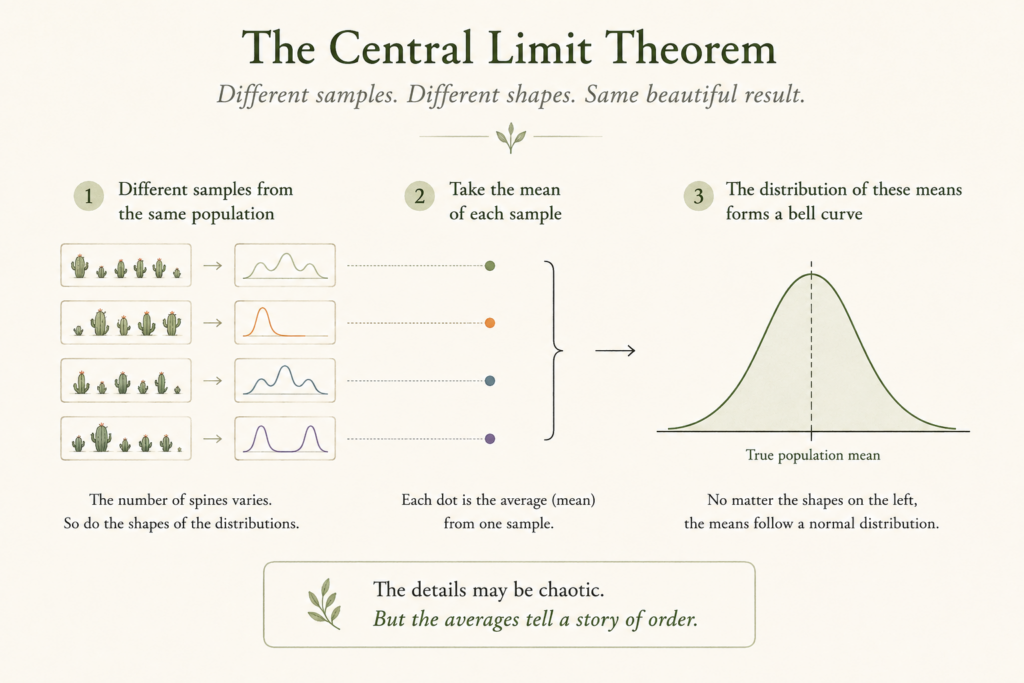
The center of this bell curve lies staggeringly close to the true population mean. Individual samples may overestimate or underestimate reality but taken together they reveal the value around which they were always fluctuating.
It is amazing that collections of averages derived from groups that abound in variation seem to follow a specific frequency distribution—the normal distribution.
There is a reason the normal distribution is called the normal distribution, and it has to do with this property of nature.
As the samples become sufficiently large, the distribution of their means begins to resemble a bell curve—even when the original distributions of observations do not!
The universe seems to be great at fibbing! It says, “look how varied I am?”
This is true,
until we do some math.
~ Granville D. Austin
Sources for Further Thinkering:
Did Abraham De Moivre really predict his own death? – An interesting (albeit potentially apocryphal) story.
Watch Everything is a Remix — Everything is a Remix
Did this make you wonder?
What did this make you notice, remember, question, or see differently?
If this reflection added a little light to your day, you're welcome to .